Dr H. in the Holy Land VII: Hebron and the Christian Peacemaker Teams

Hebron is a town that lies to the south of Bethlehem in the West Bank. In Arabic it is known as Al Khalil. We went by bus and the drive from Bethlehem south was beautiful, a lot of arable land and the green vegetation was lush making a change from the arid scenery that marks the horizon elsewhere. Scattered amongst the hills there were settlements.

Hebron, Old City. Credit: Pharoah Berger

Hebron is full of hustle and bustle and in fact I was surprised to see it so lively. The last stop on the bus was Bab-iz-Zawieh. After getting off the bus we went to meet our guide for the day. Headed towards the old city, there were rows upon rows of closed metal doors – here it is common that the shops in the old cities have often green or blue iron doors that come across the whole shop front. As we walked towards the old city and the further in we went, more and more shops were bolted and closed, I wondered how long they had been closed for – months, years? From the market area of where the bus has dropped us off it felt like we were walking into another world of destitution. People were delighted to see foreigners and always shouted out “Ahlan wa sahlan” or “welcome”. We were met by a man who despite his grey hair, walking stick and slightly stooped posture was as fit as a hare. He beamed at us clearly glad to see us and said follow me in an English accent. Read the rest of this entry »

Meeting Palestinians In Gaza

Abdul Salam al-Hissi’s boat leaves Gaza City harbour and heads out into the open sea.

Appended below are five links to poignant short videos from the excellent Guardian series A Week in Gaza, detailing the impact of the Israeli blockade of the Gaza Ghetto on ordinary people. On this 60th anniversary of the Nakba, these heart-rending portraits of Gazans is particularly timely and offers a window into life in Gaza.

As Ali Abunimah, currently in Sydney, has said, Nakba Denial not only exists, but unlike Holocaust Denial still has some mainstream intellectual acceptance. The ongoing plight of the indigenous Palestinians after 60 years deserves our attention and support now more than ever. For our part in Australia, there is a strong campaign to have the Australian Parliament acknowledge the Nakba — please consider lending your support if you are in Australia.

1. The blockade and the smugglers (4.55)
Israel’s fuel blockade has ground Gaza’s infrastructure to a halt. In response, smuggling gangs bring fuel in from Egypt through underground tunnels. Read the rest of this entry »

To the Americans Who Defend Liberty, Thank You

Thanks to Dave and Haitham, this deserves wide circulation so I am adding it here as well.

You’ll be moved and encouraged, as I am, by the ordinary Americans who speak up for a stranger.

Yes, there were some that were silent — there invariably is — and this is a lesson about silence as acquiescence and passive complicity in discrimination.

John Quinones of ABC serves as a model for his mainstream media colleagues in this particular story. R/T: 7 minutes

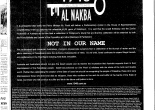
Not In Our Name: We the People Respond To Australian Parliamentary Motion On Israel At 60

In response to PM Rudd’s Motion on Israel’s 60th Anniversary year, many Australians, including this blogger, supported and signed an advertisement that appeared prominently on page 7 of The Australian national broadsheet on Wednesday 12 March. The statement reads:

Not in Our Name

We, as informed and concerned Australians, choose to disassociate ourselves from a celebration of the triumph of racism and the ethnic cleansing of Palestinians since the al-Nakba (Catastrophe) of 1948. As we write, Israel continues to expand illegal Jewish-only settlements in the West Bank including Arab East Jerusalem.

Australia and Australians should not give the Israeli people and its leaders the impression that Australia supports them in their dispossession of the Palestinian people. Israel has poisoned our (the West’s) relations with the whole of the Arab and Muslim world. Rather than celebrating the creation of the State of Israel, we should be recognising the people of Palestine, those who were dispossessed, those who lived and died as refugees, those who continue to live and die and suffer at the hands of the State of Israel, and those who will continue to suffer and die in the future until justice is done. Read the rest of this entry »

The Wall: impact and consequences, video

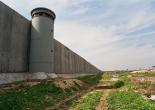
While the introduction and conclusion of the narration leaves something to be desired (it is not “democracy” that is being installed in the Middle East, it is being actively subverted and sabotaged in the OPT, for a start), this eight minute ChromoVision video is a very worthwhile production overall: it is a very good overview of what the illegal separation wall in Israel means in terms of partitioning off from Palestinians the most fertile agricultural land and water supplies for use by Israel.

The narration also is correct in noting that all the wall is not in fact along the 1967 Green Line: 157,800 acres2 – or about 11.5 percent – of West Bank land (excluding East Jerusalem) will actually lie between the Barrier and the Green Line, according to the revised route announced in 2004. Read the rest of this entry »

‘Art Attack’: meet the new creative dissenters

Amid the illegal occupation and the murderous blockade of Gaza by the IOF, here’s some inspired dissent. Artist Peter Kennard meets members of a new generation of artistic dissenters in a movement spearheaded by artist Banksy, whose art has featured in Occupied Palestine as well as his native UK.

banksy_flowerchucker.gifArt attack

by Peter Kennard | New Statesman | 17 January 2008

Banksy attracts the press attention, but around him is an increasingly influential movement of political artists operating outside the mainstream
The phone rings; the number is withheld. It’s Banksy. He wants to know whether I can go to Bethlehem over Christmas. He is putting on an exhibition, bringing together like-minded artists from all over the world to raise awareness of the situation in Palestine. Like the annual guerrilla art shows that have taken place in London for the past six years, it will be called “Santa’s Ghetto”. Two weeks later, I find myself involved in an experience that transforms my ideas about what artists can do in the face of oppression.

Read the rest of this entry »

On This Day in Peace History: the Greenham Common Women and other inspiring people power episodes

A very Happy New Year to you and yours. May 2008 be a good one for you personally and a more peaceful one for the world. We remember that these are sometimes quite politically grim times for a good slice of humanity.

Yet even in the axial Israel-Palestine conflict, most obviously a key focus here, there have been promising glimmers of action and initiatives throughout 2007. Mazin Qumsiyeh has assiduously listed many of them in his excellent mailing list newsletter (see below, after the fold, for a summary).*

More locally in Australia, John Howard was ousted both from government and from his own seat, and David Hicks has finally been released from the Guantanamo Bay gulag, and has just finished serving the remainder of his sentence in his home town. With some of the mainstream media here reporting on this atrociously, it bears remembering that there is absolutely no evidence that David Hicks actually committed any crime whatsoever. He admitted to the charge of “supporting terrorism” as the linchpin of a plea bargain, after years of effort to secure his release. Let’s hope the man is let be to recover something of his life, and all best wishes to him and his courageous father, Terry.

Some reminders of the unstoppable force of the human spirit might be a fitting last post for 2007. This Week in Peace History, published by Carl Bunin and edited by Al Frank, is an interesting and valuable compendium to which you can sign up to receive by email. It is designed to remind us that our agency counts, and to appreciate that we are indeed “part of a rich history advocating peace and social justice.” Read the rest of this entry »

Open Bethlehem: the campaign to free an occupied city

Every Christmas this site has focused upon Bethlehem, birthplace of Christ, historically a beautifully polyglot community where Christians, Muslims and Jews coexisted peacefully before the founding of Israel in 1948. Open Bethlehem is a positive campaign to raise awareness around the world about the plight of Christian and Muslim Palestinians in this historic holy city, and the fate of the city itself. The presentations featured in the embedded videos are also available to be downloaded and viewed in powerpoint from the Open Bethlehem site—this is recommended for viewing the slides in full screen, enabling the reading of the text clearly and at one’s leisure.

Previous posts on Christmas and Bethlehem can be found here:

leunig-kill-leader-movement.jpg

Organisations

Cartoon by Leunig

Caption: “Look at that! Brilliant! You kill the leader and you nip the whole movement in the bud.”

Read the rest of this entry »

A Christmas Reflection on Palestine by Sonja Karkar

Sonja Karkar is founder of Women for Palestine and her writing has been featured at Counterpunch, Electronic Intifada and many other good alternative press sites.

Picture credits: Banksy (many thanks Dave) and Polyp.

Christians and Muslims Weep Together
A Christmas Reflection on Palestine

By Sonja Karkar | December 19, 2007

As Christmas approaches this year, the thoughts of Christians all over the world will once again turn to Bethlehem, the holy town where Jesus was born over two millennia ago. Voices will be raised in joyful celebration and children everywhere will re-create the Christmas story to help us remember the circumstances in which the Christ child was born.

Such a momentous occasion in such humble surroundings heralded a new way of thinking about people’s relationship with God and with each other. It shook the foundations of an unforgiving society presided over by an unforgiving God and proclaimed peace and goodwill on earth amongst all people. There was indeed much to hope for.

However, the tranquil pastoral scene so familiar to us is not at all evident in Bethlehem today. Bethlehem does not lie still, and peace on earth and goodwill towards all is as elusive as ever. The tyranny of Israel’s occupation and its colonial expansionism is crippling the lives of both Palestinian Christians and Muslims alike. Read the rest of this entry »

A worthwhile grassroots campaign to defund the war

Please click on image to visit the website and consider joining this excellent campaign

payforpeace.jpg