US Bases in Lebanon?

Back in the press and making news again is speculation about the possible US airbase in northern Lebanon, renewed by the Lebanese daily As-Safir (Arabic). Only this time, there’s more. In English, the idea was best enunciated by Franklin Lamb in Its The Airbase, Stupid (see also ‘Does “Loving” Lebanon Mean the Bush Administration Never Has To Say Its Sorry?’), and he is cited again in the article from Al-Manar below.

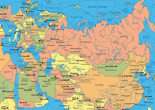
The Daily Star also carries an article on the issue, and how this week’s visit to Lebanon by US Undersecretary of Defense for Policy Eric Edelman has renewed speculation that Prime Minister Fouad Siniora’s government has plans to turn the country into a forward base from which the Pentagon can counter what it sees as resurgent Russian influence in Syria, as claimed in Y-Net. Is the Cold War making a comeback?

All this would involve a string of bases in Lebanon: one in the Christian region of Bsharri; one in the Bekaa; and one in the plains of Damour south of Beirut. This would be in addition to the airstrip at Kleiaat being used as an airbase, two naval bases near Tripoli, and a wish-list for radar stations in Qornet Sawda, Barouk and Dahr al-Baidar. This is denied by US Ambassador to Lebanon Jeffrey Feltman. What we can be more sure of is that what is being pushed for is a less neutral stance towards the resistance (namely, Hezbollah) and Syria — and a reassessment of Lebanese relations towards Israel—that’s right, let’s forget the willful invasion and nefarious destruction of the country by Israel’s hafrada regime last year ever happened.

See also Iran’s Press TV; Israel’s Ha’aretz carries AP’s Hezbollah slams U.S. call for ‘partnership’ with Lebanon army and the International Herald Tribune also carries the AP piece: US to build “strategic partnership” with Lebanese army, says Pentagon official. In the blogosphere have a look at Zentor’s In the Middle of the East blog with The Mother of all Sparks and Mustapha’s Beirut Spring blog with A US Military Base in Lebanon? On a different but related topic, see Robert Fisk’s Secret armies pose sinister new threat to Lebanon.

Lebanon US base to counter Qaeda, Hezbollah or Russia?

Mohamad Shmaysani

18 Oct 2007 Al Manar

The issue of building a US airbase in northern Lebanon has resurfaced. Senior US political and military officials have been flocking into Lebanon since the Israeli war against Lebanon in 2006, the last of whom is Eric Edelman, the US Undersecretary of Defense for policy, heading a Pentagon delegation. The Lebanese daily Assafir raised speculations of a likelihood to build US military bases in Lebanon and alter the Lebanese army’s creed. “It is perceived that the US is focusing on the army’s directive which includes the fundamental national policy adopted by the army, particularly article five which stresses on the brotherly and special ties between Lebanon and Syria and article eight which underscores supporting the resistance,” Assafir said.In the report which the daily said is based on “reliable sources”, the Eric Edelman delegation met with the head of the unconstitutional government Fouad Saniora, Defense Minister Elias el-Murr and Army General Michel Suleiman and tackled four issues: the military situation in Lebanon, security and intelligence, the situation of the Lebanese Army and Lebanese state policy.

US Ambassador to Lebanon Jeffery Feltman, who reportedly attended the Pentagon delegation meeting dismissed Assafir daily report as insulting to the Lebanese army. Sources closed to Saniora’s unconstitutional government brushed aside as fabricated reports that the US had proposed building military bases.

Earlier reports revealed that a US airbase in the north of Lebanon would be built in the model of El-Udeid base in Qatar, for covert operations against the Syrian regime and to safeguard the oil pipelines of Baku-Tiflis-Ceyhan and Mosul-Kirkuk-Ceyhan. Read the rest of this entry »

Israeli arming of Burma-Myanmar junta

buddhist-monks-burma.jpgLubricated by US taxpayer dollars that go to Israel each year, the Israeli hafrada regime has in turn been flogging arms to Burma’s military junta, responsible for shooting Buddhist monks and foreign journalists in pro-democracy marches in the past week. Amid the chorus of condemnations and sanctions from Bush, Brown and others, no corresponding condemnation is issued about how these peacefully demonstrating Buddhist monks are being murdered with Israeli arms — why shouldn’t sanctions properly be raised to apply to the military regime-supporting arms pusher?

Let’s be clear — Israel is not the only arms supplier to the military regime. Most countries buy arms from more than one country source, and China has traditionally been a large supplier and a significant trading partner (China is Burma’s third most important export destination, and its largest country of origin for imports– 2005 figures). A possible Indian sale of its Advanced Light Helicopter (ALH) to Myanmar also involves vital components sourced from six EU states (Belgium, France, Germany, Italy, Sweden and the UK), also potentially — if the transfer goes ahead — circumventing an arms embargo in place since 1988.

The issue is not simply that of arms sales and hypocrisy however, but intelligence links and other ties, and the Israeli and Myanmar regimes have had a close history, and a strong military relationship that continued well after the 1962 coup as a Jane’s Intelligence Report from 2000, excerpted below, details.

Moreover, while European firms are under scrutiny and investigation for any possible transgression, there is no scrutiny of the key role the Israeli military and armaments have played. Israel, like the Myanmar regime, has a widely-documented record of egregious and systemic human rights abuses. In Myanmar-Burma, these abuses include summary executions, torture, and the recruitment of child soldiers. In Israel, they include ethnic cleansing, ongoing military occupation, starvation and deprivation of electricity and restrictions of movement, tens of thousands of detainees held without charge or trial, and much else besides. While the Chinese government is being pressured to use its influence with the Myanmar regime, no such demands are made of its other ally, whose official line is the claim that Israel “has no form of leverage to apply on Burma.” Read the rest of this entry »

Honouring the victims: Sonja Karkar on Sabra and Shatilla

Sonja Karkar is an Australian Palestinian advocate and founder of the Melbourne-based Women for Palestine. Her pieces regularly appear in the Electronic Intifada, Z-Net, Counterpunch and local mailing lists.

Another worthwhile read, I post this in honour of the memory of all the victims of that terrible episode, and all those affected by it; that is the least we in the alternative press and blogosphere can do.

As Karkar writes, citing Robert Fisk fifteen years after the massacre,

“Had Palestinians massacred 2,000 Israelis 15 years ago, would anyone doubt that the world’s press and television would be remembering so terrible a deed this morning? Yet this week, not a single newspaper in the United States – or Britain for that matter – has even mentioned the anniversary of Sabra and Shatila.”

Warning: the following article depicts the horror of a massacre and should be read by mature readers — details of the atrocity appear over the jump.

Highly recommended: Franklin Lamb’s Letter to Janet is a must-read if you haven’t already done so, also disseminated widely.
candle3.gif

Sabra And Shatila

On massacres, atrocities and holocausts

by Sonja Karkar

September 16, 2007
Women for Palestine

The Massacre

It happened twenty-five years ago – 16 September 1982. A massacre so awful that people who know about it cannot forget it. The photos are gruesome reminders – charred, decapitated, indecently violated corpses, the smell of rotting flesh, still as foul to those who remember it as when they were recoiling from all those years ago. For the victims and the handful of survivors, it was a 36-hour holocaust without mercy. It was deliberate, it was planned and it was overseen. But to this day, the killers have gone unpunished.

Sabra and Shatila – two Palestinian refugee camps in Lebanon – were the theatres for this staged slaughter. The former is no longer there and the other is a ghostly and ghastly reminder of man’s inhumanity to men, women and children - more specifically, Israel’s inhumanity, the inhumanity of the people who did Israel’s bidding and the world’s inhumanity for pretending it was of no consequence. There were international witnesses - doctors, nurses, journalists - who saw the macabre scenes and have tried to tell the world in vain ever since.

Read the rest of this entry »

Franklin Lamb: Remembering Sabra-Shatilla–a Letter to Janet

candle3.gifI was very moved by this profoundly affecting piece from Franklin Lamb. He not only offers an excellent reflective analysis of the terrible massacre of Palestinians at Sabra-Shatilla in Lebanon at this timely 25th anniversary marker, but generously and courageously shares his personal experience. For him, this was a political massacre compounded by the very personal loss of his beloved. Our thoughts and condolences go out to him, and to all the families affected by this dark chapter in Lebanon’s history, which involved active Phalange involvement in a heinous Israeli-enabled crime. We share in the profound sorrow.

Warning: Depicts the horror of a massacre

The 25th Anniversary of the Massacre at Sabra-Shatilla

Will anyone remember? Does anyone really care anymore?

Franklin Lamb

Martyrs Square
Sabra-Shatilla Palestinian Refugee Camp
Beirut

A Letter to Janet

Dearest Janet,

It’s a very beautiful fall day here in Beirut today. Twenty-five years ago this week since the September 15-18, 1982 Massacre at the Palestinian refugee camps at Sabra-Shatilla. Bright blue sky and a fall breeze. It actually rained last night. Enough to clean out some of the humidity and dust. Fortunately not enough to make the usual rain-created swamp of sewage and filth on Rue Sabra, or flood the grassless burial ground of the mass grave (the camp residents named it Martyrs Square—one of several so named memorials now in Lebanon) where you once told me you that on Sunday September 19, 1982, you watched, sickened, as families and Red Crescent workers created a subterranean mountain of butchered and bullet-riddled victims from those 48 hours of slaughter. Some of the bodies had limbs and heads chopped off, some boys castrated, Christian crosses carved into some of the bodies.

time-1982-cover-sabra-and-shatila.jpgAs you later wrote to me in your perfect cursive:

“I saw dead women in their houses with their skirts up to their waists and their legs spread apart; dozens of young men shot after being lined up against an ally wall; children with their throats slit, a pregnant woman with her stomach chopped open, her eyes still wide open, her blackened face silently screaming in horror; countless babies and toddlers who had been stabbed or ripped apart and who had been thrown into garbage piles”.

Today Martyrs Square is not much of a Memorial to the upwards of 1,700 mainly women and children, who were murdered between Sept. 15-18. You would not be pleased. A couple of faded posters and a misspelled banner that reads: “1982: Saba Massacer”, hang near the center of the 20 by 40 yard area which for years following the mass burial was a garbage dump. Today, roaming around the grassless plot of ground is a large old yellow dog that ignores a couple of chicken hens and six peeps scratching and pecking around.

Since you went away, the main facts of the Massacre remain the same as your research uncovered in the months that followed. At that time your findings were the most detailed and accurate as to what occurred and who was responsible.

The old 7 storey Kuwaiti Embassy from where Sharon, Eytan, Yaron, Elie Hobeika, Fradi Frem and others maintained radio contact and monitored the 48 hours of carnage with a clear view into the camps was torn down years ago. A new one has been built and they are still constructing a Mosque on its grounds. Read the rest of this entry »

Franklin Lamb on Lebanon’s Presidential Election: Another Casus Belli?

franklin-lamb.jpgFranklin Lamb’s latest thoughts on Lebanese politics and hegemonic designs on the Middle East through the lens of Lebanon’s upcoming Presidential election and its internal politics.

Bio: Franklin Lamb is Director of Americans Concerned for Middle East Peace, Wash. DC-Beirut and Senior Fellow, The Institute for Middle East Policy Dialogue, USA. Lamb’s just released book, The Price We Pay: A Quarter Century of Israel’s Use of American Weapons in Lebanon (1978-2006) is available at Amazon.co.uk. In the USA, the title is also available at www.LebaneseBooks.com. His forthcoming volume, Hezbollah: A Brief Guide for Beginners is due out this year in Arabic and English.

In beautiful 5000 year old Baalbek, named by the Phoenicians after their Sun God, Baal, in Lebanon’s Bekaa Valley, one can enjoy, amidst the detailed ruins of the Temples of Bacchus and Jupiter perhaps the finest examples of Imperial Roman architecture at its apogee. In this cradle of resistance to tyranny, with its Shia majority and some argue the birthplace of Hezbollah, one is reminded that in Lebanon history has always repeated itself.

The Phoenicians, the Egyptians, the Persians, the Babylonians, the Greeks, the Romans, the Arabs, the Crusaders, the Turks, the French and now the US and Israel. While Lebanon is an ancient place, it has almost always been controlled by someone other than the local inhabitants.

As next month’s crucial Lebanese Presidential election looms, seen widely here as a contest which may well determine whether US/Israel dominance and interference is terminated sooner rather than later, one is reminded that it was 25 years ago, nearly to this day, that another crucial Lebanese election was held on virtually the same fundamental issues by a similarly deeply split populace.

On the one side now as then, are indigenous forces that identify with their Arab roots and that seek to assert an indigenous identity and a more nationalist ideology, and on the other side are forces that prefer close ties to the US and France as well as international alliances. Among these are some who are prepared to accept a peace treaty with Israel even before the achievement of a just solution to the Question of Palestine including the full Right of Return plus Full, Fair and Equitable compensation for Lebanon’s 430,000 Palestinians.

Lebanon’s current President, Emile Lahoud, extended in office by Syrian diktat in 2004, is scheduled to leave office in November. The parliament is scheduled to convene to elect a president on September 25. A quorum of two-thirds is necessary for the election to proceed. A simple majority vote is necessary to elect a president, once (and if) a quorum has assembled.

While many of the issues from 1982 are the same, so are many of the players such as Nabeh Berri, Salim al-Hoss, Samir Geagea, Walid Jumblatt, Amin Gemayel, Michel Aoun, the Christian and Muslim religious leaders, ambitious Generals, and the list goes on.

So too, is the nearly identical role and posture of the US administration. Read the rest of this entry »

Ban the Bomblets

From the Australian Dateline program, an excellent segment on cluster bombs that aired in April this year, with a focus on Lebanon.

Unexploded Israeli-launched bomblets continue to litter the Lebanese countryside and endanger playing children and farming families, responsible for the maiming and killing of dozens of civilians well after a conflict has formally ended.

The campaign to ban these insidious weapons everywhere is a most important and worthwhile one. The program follows the effort to ban these munitions internationally.

We recall that during last year’s abominable summer war, 90% of Israel’s cluster-bombs were launched just in the last 72 hours of the war, when, significantly, a ceasefire was known to be imminent.

That is, quite apart from their obviously immoral use, launching them made absolutely no military-strategic sense for Israel, either. The millions of cluster bombs from Israel are nothing more than a massive war crime. In the second video clip, Shimon Perez says they were a “mistake”.

Yet the Israeli government still refuses to provide international mine clearing teams and the Lebanese government with details of where the cluster bombs were fired, which would facilitate clearing operations.

Video segment intro:

Ten years ago, a committed bunch of international activists received the Nobel Peace Prize for their campaign to have land-mines banned worldwide. As a result of their efforts, close enough to three-quarters of the world has signed up to the ban. Now, these same people have their sights set on cluster bombs. And at the forefront of their effort is an Australian, John Rodsted, who these days pretty much devotes his entire life to ridding the world of these deadly weapons. David Brill recently travelled with Rodsted to southern Lebanon, where people are still dying from the cluster bombs rained down by the Israelis in the last days of that recent war.

Jewish Conscience: If Not Now, When?

Produced last year by Jewish Conscience, this video features a variety of Jewish voices speaking out.

Meanwhile -

Amira Hass reports that Gaza residents tell of demeaning practices by Shin Bet; and the WaPo reports that Patrick Syring, a State Dept employee, is facing charges over threats and slander against the Arab-American Institute.

If Not Now, When?

R/T 14 minues; H/T: Haitham Sabbah

The Ghost of Dick Cheney Past: Occupying Iraq would be a quagmire

Dick Cheney rendering a judgment, publicly, on the strategic ill-advisability of invading and occupying Iraq in 1994, before the full-throttle war-mongering of the Israel Lobby and the profiteering prospects of his own companies would change things. (R/T: 1:22)

UPDATED with transcript from Editor&Publisher after video clip

Read the rest of this entry »

A Year On: Survivors of the Summer War

These clips are from Al Jazeera a couple of weeks ago on the 27th July (H/T Norman Finkelstein), and a timely marker of the one year anniversary of Israeli government savagery in attacking Lebanon for 34 senseless days, killing 1200 Lebanese, mostly civilians. Israeli casualties were about a sixth of that and were mostly combatants.

Part One (8.34)

Part Two (13.06) here

Civilians pay the price: US arms sales to the ME

ADDENDUM: A great flash animation by Mark Fiore on the topic at hand: with thanks to the wonderful David Baldinger

cobb_madchildabuse.jpg

The Bush administration has just recently announced plans for a giant $60+ billion arms deal to a select number of client regimes in the Middle East. Primary beneficiaries are Israel ($30 billion alone, up 25%) and Saudi Arabia, but also Egypt, Jordan and five small Sunni Arab states in the Persian Gulf.

The administration’s sham claims about waging war for democracy in the Middle East are shown up most vividly in this monster arms deal. It arms and continues to arm a number of anti-democratic hereditary monarchs, military dictators and oil sheiks, propping up these corrupt despots against their own people, who often lack basic and fundamental political rights.

Initial Israeli opposition to the proposed sale of high-tech weapons to the Arab states was assuaged by agreeing to extend by ten years US military subsidies to Israel. Of course, as Curtis at CSTF points out, Olmert then issued a specious reference to Saudi Arabia and satellites as “moderate Arab states” after flushed with the 25% increase sweetener:

“We understand the need of the US to assist the moderate Arab states which are in one front with the US and us in the fight against Iran, and on the other hand we appreciate the renewed and re-emphasised support for Israel’s military and security advantage,” he said.

The keywords are “military and security advantage“: Iran poses a threat to Israeli regional hegemony, not its existence.

The military sales “package” to Sunni Saudi Arabia is outwardly rationalised as a counterweight to the claimed threat posed by Shia Iran. No mention of the bumper profits — as a Haaretz piece notes, the arms sales to Saudi Arabia is a highly profitable (for the US arms companies) circular transaction: Saudi Arabia will pay for the advanced U.S. weapons systems with profits from oil sales to the U.S. It may also represent a form of kickback paid to the US by the House of Saud so it won’t take over the country’s oil fields, as Jeff Blankfort suggests.

bush-and-king_abdullah.jpgahmadinejad-and-king-abdullah.jpg

H/T: With thanks to Naj’s post ‘Can King Abdullah Walk Without Holding Hands?

The two major recipients of the US deals are the region’s two biggest human rights violators. The practices of both governments are most antithetical to the principles the current US administration claims to uphold, of course. Saudi Arabia has a despotic regime and many Saudis suffer from an absence of some of the most basic human rights; Israel is a worse than apartheid state that continues land theft and the displacement and occupation of a whole people with the largely unwitting and continued largesse of the US taxpayer.

According to Yasmine Ryan in her review of the book, Israel has just banned Franklin Lamb’s newly released The Price We Pay: A Quarter-Century of Israel’s Use of American Weapons Against Civilians in Lebanon (1978-2006).

This is an update on Lamb’s first edition, Israel’s War on Lebanon. In 1984, The New York Times credited the book with gathering the evidence that spurred the Reagan administration into curtailing Israel’s supplies of US cluster bombs, according to Ryan.

Lamb looks at the legality and morality of the $15.1 million per day in US aid that Israel receives, more than half of which Israel spends on armaments and munitions. The pre-planned war on Lebanon last year claimed well over a thousand lives, the majority of them civilians. The Israeli casualty numbers were a fifth of Lebanon’s, and were mostly combatants. Whether civilians or combatants, Lebanese or Israeli, these were needless deaths in a sadistic war. Read the rest of this entry »

Arab divas: three generations

Friends, hope you have a terrific weekend; I’ll be back on the blog deck proper next week, but in the meanwhile, here’s a musical interlude. For some, this may be an introduction, to others, simply a revisit to these three recent generations of Arab singing divas.

I have selected but three or four of the leading lights, and my last selection features a 16 y. o. rising star who reprises a song by my first chosen singer and the biggest singing superstar in Middle East modern history, bringing it full circle.

It is fair to say that the Arab world worships its singers, particularly its female singers. A rather nice feature is that they are all crowd pullers whatever their age — something we tend not to see in the West with female singers unless they’re opera singers. (How many female Frank Sinatras do we see still singing and performing into their seventies? I can’t think of one).

My choices: Lebanon has produced the beautiful voice of Fairouz, much loved all over the diverse Arab world, and now about 70. But the biggest star in the constellation, bigger than Elvis in her day, is Egypt’s Oum Koulthoum/ Umm Kulsum (1904 - 1975) [NB. spelled and pronounced Kulsoum in Egyptian Arabic].

Led Zeppelin and Bob Dylan dug her music (1966 Playboy interview). Maria Callas called her The Incomparable Voice. Umm Kulsum drew from her religious singing background in which her father, an Imam, taught her to sing verses from the Qu’ran. She went on to become the biggest Middle Eastern diva of the twentieth century and still sells like hotcakes today. Her’s is a life inextricably entwined with the modern history of Egypt: before becoming President, Nasser was a huge fan and his radio campaigns would follow her programs, arguably boosting his popularity by association. Millions mourned her passing in 1975, with more than a million taking to the streets in homage on the day of her state funeral (historic footage here).

Here was singing that produced tarab-musical ecstasy. As helpfully cited in Rudy Meixell’s Oum Kalthoum for Non-Arab Ears: An Incomplete Guide (worth a read but lapsed links at foot of page):

The intensity of tarab depends primarily on the voice and performance style of the singer, as exemplified by Umm Kulthum. Her performances often only approximately followed the fixed rhythmic-temporal organization of the melody. She would strip some melodic passages of their strict rhythmic form in order to repeat, vary, and paraphrase individual sections in an improvisatory way or transform the musical material more dramatically within the framework of traditional modal principles.

Her presentation thus hovered between that which she performed and that which she created herself. The musical contrast between the familiar and fixed on the one side and the new, freely structured though related on the other creates, in general, a tension whose up and down evokes tarab in the listener. The emphasis of this contrast represents the most striking stylistic element of Umm Kulthum’s artistry.” (Music of the Arabs, p.149)

So here’s but a snippet of the legendary Umm Kulsum, and there’s more on the web. My favourites are Amal Hayati and Ya Zaloumni but they are quite long for this introductory post. The poetry of the lyrics will not leap at you unless you understand Arabic but her voice is divine (2.14):

And on to Lebanon’s Fairouz, equally legendary and much loved and still with us. I grew up with my grandmother singing sweet Fairouz songs to me. If I had to nominate a favourite song, it would be one that was my constant companion during the sadistic attacks on and destruction of Lebanon last year by the insane Israeli government: Sakana al-Layal (The Night Became Calm). The lyrics are by Khalil Gibran (yes, the one who wrote The Prophet) and it can be listened to here (with translated lyrics in English).

Here’s Fairouz in Las Vegas, at the MGM Grand Garden Arena in 1999, performing Khedni “Take Me” (4.49)

Now, the younger set. I’m not as familiar with the contemporary scene, having first learned to appreciate the old-timers rather than the reverse, but I have picked two singers, one established: Haifa Wehbe (Lebanon), and the other a 16 y.o. rising star from Syria: Shahad.

In contrast to Fairouz’s sedate stage minimalism, this vid features Haifa’s coquettish theatrics and hair-flicking made even more famous by great Lebanese comedic impersonator Bassem Feghali (he does a fantastic send-up of Sabah, too, in which he also sings and you’d be hard-pressed to tell them apart). Fashionistas will love Haifa’s emerald dress.

Haifa Wehbe (8 m– 2 songs)

And the tradition continues with an amazing young talent with a voice, grace and maturity beyond her 16 years, with Syria’s Shahad Barmada who reprises the greats very well. Here’s her singing Oum Kulsoum’s Alf leyla wa leyla: A Thousand and One Nights (3 minutes):

Finally, on the quintessentially Arabic instrument (with thanks to the Persian influence), Syrian singer and musician Farid el-Atrache plays the traditional oud (6m). I should add that until seeing this I had no idea this famous singer was also an accomplished oudist.

In Somalia, It’s The Blood Money, Stupid! by Amina Mire

Another valuable and urgent piece on Somalia with thanks to Amina Mire for sending it. She writes about the underexamined role of China’s scramble for Africa’s natural resources, in addition to African Union (AU) troops in Somalia serving as a mercenary army in service to foreign forces determined to “gain ownership over Somalia’s unexplored natural resources and install a puppet US friendly regime”.

“A Prayer of Shame:” In Somalia, It’s The Blood Money, Stupid!

meles-zinawi.jpg

Africa’s Leaders Are Shoulder to Shoulder and Hips on Hands with Meles Zinawi..1 Read the rest of this entry »

Franklin Lamb on Lebanon and the Approaching Prisoner Exchange

Franklin Lamb’s latest dispatch (3 July) writing from Khiam detention centre and Ansar Prison, Lebanon (bold emphasis mine). All previous Lamb articles available here.

The edginess of the people in Lebanon is palpable these days, North and South, East and West. A car exhaust backfires, a dump truck’s rear metal gate slams shut, a fresh Lebanese army recruit drops his US mint new M-16 on the pavement outside the Main Gate of the American University of Beirut, as he and his buddies pile into the army transport truck at shift change, and people flinch and grimace. The sandwich man at the Socrates Deli and the Ras Beirut book store employee and their customers exchange knowing glances and read each others eyes: “is this it?”

“It”, being the spark as in 1914 Sarajevo that was all that was needed to ignite a war so horrible that many European societies still have skewed demographic tables, such was the needless loss of millions of young men in World War I.

It is a tense atmosphere here when often the first question on rising each morning or greeting a friend is “how was the night? Are things OK?”

There are rumors and there are rumors of war.

This observer is not sure what to make of, for example, the snide jokes and rumors that Lebanese Prime Minister Fuad Siniora is not being allowed to leave his Serail compound office without the permission of US Ambassador Feltman, or that Feltman has to issue a ‘hall pass’ if Siniora wants to use the men’s room, or that Siniora’s personal phone is answered at the US Embassy. Or that the Embassy is using Lebanon’s General Security agency to monitor journalists and pro-Palestinian and pro-Lebanese Americans, even supplying General Security with files complete with transcriptions of phone conversations which took place in America with US NGO’s and Pro-Palestinian groups during the early days of the July War.

Whatever the use being made of Lebanon’s General Security agency by the Bush administration, or the pressure from the Welch Club, PM Siniora’s stock rose in the hearts and minds of many when on June 27, 2007 at his Paris news conference, the Prime Minister of the Republic of Lebanon joined those calling for the release of all the Lebanese and Palestinian Prisoners held in Israeli prisons in exchange for the Israeli soldier held by Hamas and the two held by Hezbollah.

Siniora’s ‘clean swap’ prisoner exchange appeal is supported by the Findings and Recommendations of a recently completed six month study of the Lebanon /Palestine prisoner file undertaken by American researchers at the American University of Beirut. The conclusions of the Study are solely those of the Researchers as AUB’s administration had no input and have no responsibility for the Recommendations.

The have been 34 prisoner exchanges between Arabs and Israel dating from 1948 to the present. In addition there have been 13 ‘political prisoner releases’ by Israel, Syria and others. Of the prisoner exchanges, six took place during the 1960s, nine during the l970s and five in the l980s. The political exchanges were attached to particular events such as Oslo, the Mossad’s botched attempt to kill Hamas leader Meshal in Jordan, or to encourage the other side to act in a particular way. The largest release was Arafat’s 11/23/83 success with gaining the release of 4,700 Arab prisoners from Ansar prison and the May 20 1985 “Jibril Deal” which gained the release of 1,155 high value prisoners.

Yet the history of the prisoner exchanges has been problematical. Often exchanges failed